

The AI‑driven digital landscape
Search is no longer static. It is generative as well as multi-modal. Google is not just indexing pages; it is evaluating experience, context and intent. This shift has changed how content is discovered, ranked and trusted.
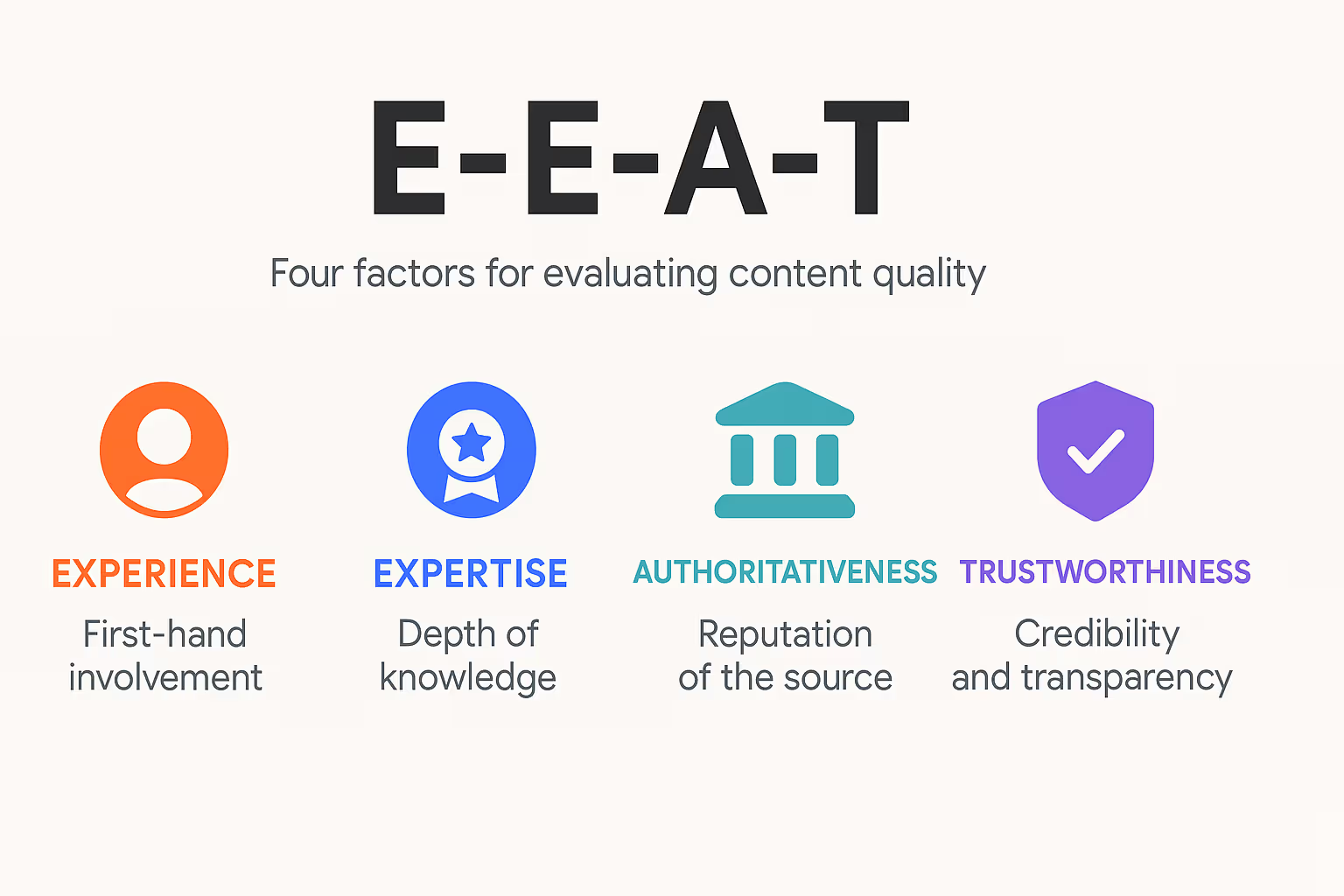
At the centre of this disruption is Google's E-E-A-T policy, which stands for Experience, Expertise, Authoritativeness, and Trustworthiness.
It is not a new formula, but its role has changed. These are no longer abstract editorial ideals. They now inform how Google’s AI systems measure content quality and filter visibility.
What’s at Stake for Brands?
The rise of AI-generated search summaries, stricter E-E-A-T enforcement, and MUVERA signals isn’t just a tech update. It’s already disrupting how B2B buyers discover, trust, and engage with brands.
If your content isn't aligned:
- You may lose up to 50% of organic clicks due to AI Overviews replacing traditional results.
- Your top-ranking pages could be demoted if they lack real expertise, author bios, or helpful formatting.
- Poorly structured content won't train Google’s models effectively, causing your brand to vanish from high-value search journeys.
Traffic, leads, and authority are now earned through experience-first content.
Brands stuck in outdated SEO habits risk erosion of trust, reduced visibility, and lower content ROI.
“E-E-A-T isn’t new, but the added focus on experience pushes content quality to the next level. At FTA Global, we ensure every blog reflects real client scenarios, includes process checklists, uses tool screenshots, and links back to our team’s LinkedIn profiles or other relevant profiles.
Hence, the content isn’t just informative, it’s lived, proven, and trustworthy. As VP of Branding at FTA, this means prioritizing content for our audience that builds credibility, showcases our team’s expertise, and turns every piece into a brand trust asset for our readers.” - Srjita Das Roy, VP-Branding, FTA Global
Key Takeaways
- E-E-A-T now includes ‘Experience’ as a core signal. Google rewards content backed by first-hand knowledge, direct product use, or on-the-ground reporting.
- Responsible AI drives results. Microsoft saw a 75% boost in trust signals and moved from #10 to #4 in search rankings by aligning with E-E-A-T standards.
- SGE is reshaping content discovery. To appear in AI-generated search results, content must be structured, rich in detail, and supported by quality visuals. Content is now a multi-format production to cater to an AI-aware audience.
- An E-E-A-T checklist is essential. Define audience, show expertise and experience, cite sources, disclose AI, maintain site health, and update continuously.
- Scaled content and site reputation abuse are being penalised. Google’s 2024 update targets low-value mass content and third-party publishing that misuses domain authority.
- Google’s search signals are now intent-driven and context-aware. With MUVERA and other AI-led ranking systems, content relevance is judged across multiple vectors. It's no longer about keywords alone; it's about matching user intent with trustworthy context.
- AI governance is still lacking at leadership levels. With only 14% of global boards regularly discussing AI, marketers must push for responsible adoption aligned with their frameworks.
- Brands must treat content as a strategic asset, not a volume game. The shift from output to impact means marketers must align strategy with business goals, audience value, and measurable trust signals across every touchpoint.
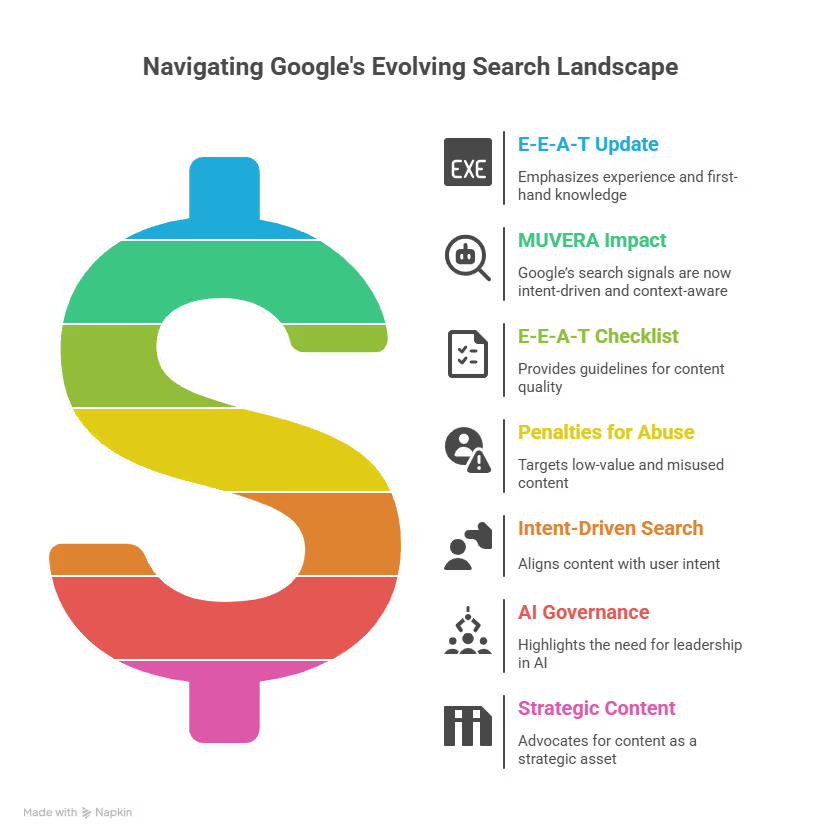
AI-generated content is flooding the web. Brands are scaling production with automation. But Google’s 2025 updates are designed to punish scaled content, low-value pages, and third-party domain misuse.
Algorithms like MUVERA are pushing relevance deeper into semantic territory, comparing content across multiple vectors rather than matching keywords.
Meanwhile, Google’s evolution is visible through:
- BERT* improved contextual understanding
- MUM* brought multimodal reasoning
- SGE* is rewriting how users interact with search entirely.
From sidebars to snapshots to suggested follow-ups, the search result itself has become a generated experience.
For marketing leaders, this creates a dual challenge: keeping up with rapid algorithmic changes and responding with content that performs under new quality standards.
First-hand reviews, structured visuals, expert authorship and other production methods are replacing static blogs, templated advice, and SEO-stuffed landing pages.
This whitepaper outlines how brands, publishers and agencies should respond. It decodes what has changed in the last five years, what Google now rewards, and what a future-proof content strategy looks like.
Whether you're leading a marketing function or advising clients, understanding how to optimise for E-E-A-T is now central to staying competitive in the AI age.
Glossary
- BERT – A neural language model introduced by Google that analyses the context of words by looking at the words before and after them, improving understanding of conversational queries. Google Blog
- MUM – Google’s Multitask Unified Model uses a multimodal transformer to understand and generate language across 75 languages and different media, enabling richer search experiences. Google Blog
- Search Generative Experience (SGE) – An experimental interface in Google Search that uses generative AI to produce summaries and enable conversational exploration. Google Blog
What’s changed in the last decade?
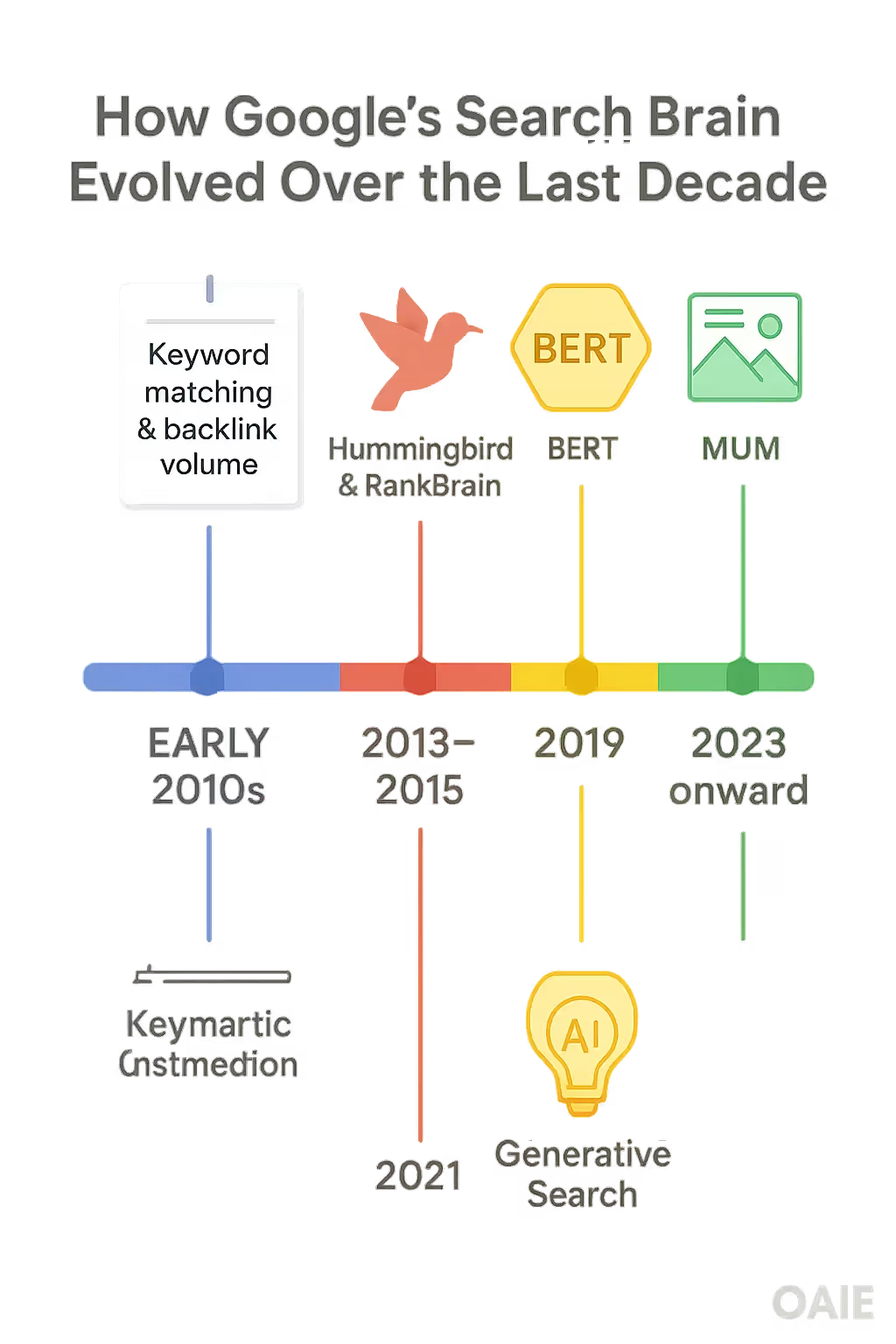
How Google’s Search Brain Evolved Over the Last Decade?
- Early 2010s: Search relied on keyword matching and backlink volume to rank content.
- 2013–2015: Hummingbird and RankBrain introduced semantic understanding and machine learning to interpret intent.
- 2019: BERT enabled full-context language processing, improving how Google understands natural queries.
- 2021: MUM brought multimodal reasoning, combining text and visuals to answer complex, layered questions.
- 2023 onward: Generative Search (SGE) reshapes results into AI-generated summaries, raising expectations for depth, clarity and format-rich content.
User experience becomes integral
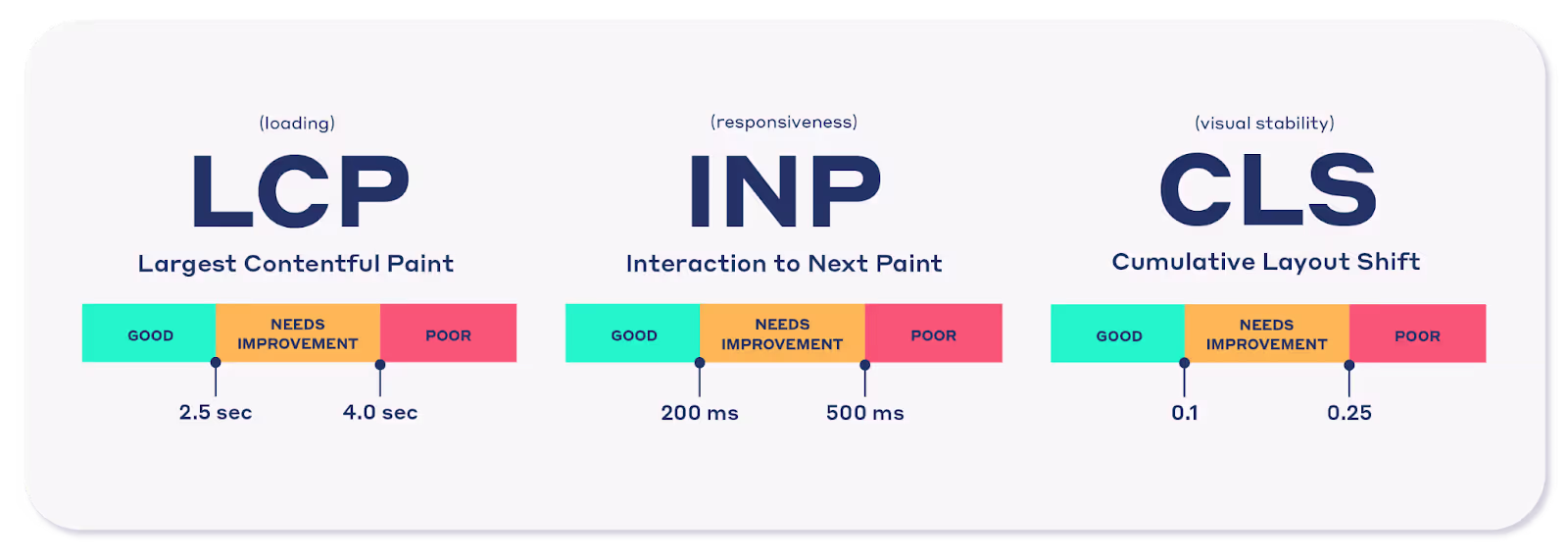
Google’s page experience update (June 2021) introduced Core Web Vitals metrics measuring loading performance, interactivity and visual stability as ranking signals.
Sites with fast load times, stable layouts and responsive design gained a competitive edge.
The rollout of mobile-first indexing further emphasised the need for accessible, secure, and mobile-friendly experiences.
Marketers had to move beyond textual optimisation to address design, usability and technical performance.
Glossary
- Core Web Vitals – A set of metrics measuring loading performance (Largest Contentful Paint), interactivity (First Input Delay) and visual stability (Cumulative Layout Shift) used by Google to evaluate page experience. Web.dev
- YMYL – An acronym for “Your Money or Your Life,” describing topics that could impact a person’s finances, health or safety; such pages are held to higher quality standards. Google Developers
Helpful content and anti‑spam policies
In August 2022, Google launched the helpful content update, a machine‑learning classifier that identifies and demotes content that fails to provide a satisfying experience.
The update encourages creators to focus on people‑first content rather than generating pages primarily to attract search traffic.
The April 2024 spam update strengthened enforcement against scaled content abuse, site reputation abuse and expired domain abuse.
Why did Google expand E‑A‑T to E‑E‑A‑T?
Google first introduced E‑A‑T (Expertise, Authoritativeness, Trustworthiness) in its Search Quality Rater Guidelines to help evaluate content quality.
Over time, generative AI, misinformation, and zero-click experiences made surface-level optimisation insufficient.
Google responded by elevating the bar, adding “Experience” as a fourth dimension, transforming E‑A‑T into E‑E‑A‑T.
Why the shift?
- The rise of AI-generated content and zero-click results created a gap between surface-level accuracy and real insight.
- Google introduced “Experience” to ensure content is not just factually correct, but also rooted in real-world, lived knowledge.
- The framework now values content that demonstrates first-hand involvement, not just theoretical repackaging.
Breakdown of E‑E‑A‑T
Experience
- Content should reflect direct involvement, observation or use, not just summaries of other sources.
- In high-stakes topics like finance or health, first-hand experience must be paired with citations and disclaimers.
Expertise
- Demonstrated through qualifications, professional practice or deep domain knowledge.
- Should be visible via author bios, credentials, case studies or evidence-based insights.
Authoritativeness
- Earned through recognition from other credible sources, backlinks, citations or institutional affiliations.
- Strengthened by publishing consistently high-quality, topic-relevant content over time.
Trustworthiness
- Built through transparency, factual accuracy, ethical disclosures and secure environments.
- Reinforced by clear sourcing, disclosure of AI use, privacy compliance and technical reliability.
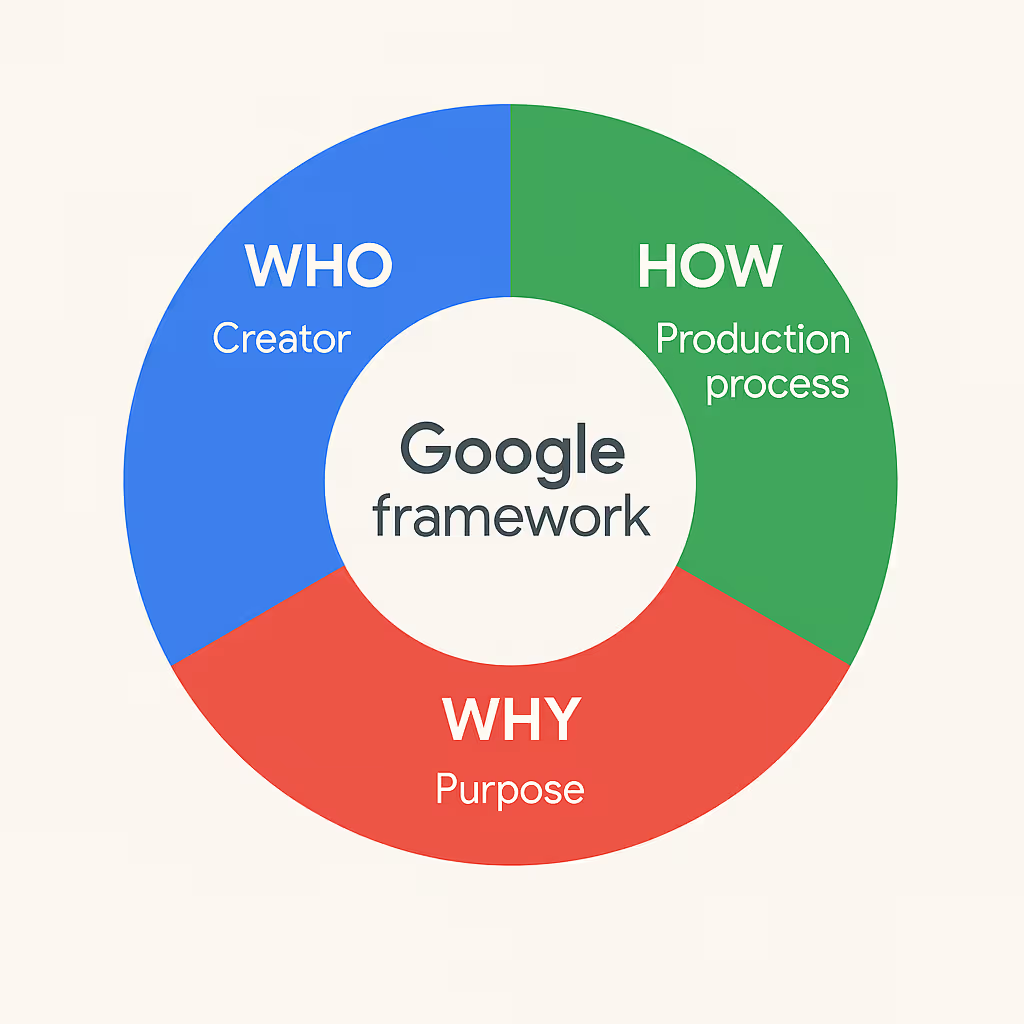
The “Who, How, Why” framework
To operationalise E‑E‑A‑T, Google recommends asking three core questions:
- Who created the content? Identifying the author and their credentials helps readers and algorithms gauge expertise and accountability.
- How was the content produced? Google suggests adding metadata and describing the editorial process.
- Why does the content exist? Clarifying whether the purpose is to inform, entertain or sell ensures alignment with user intent.
Is there a connection between E‑E‑A‑T and YMYL?
Topics affecting finances, health, safety or well‑being, called YMYL (Your Money or Your Life) are subject to heightened scrutiny. Google explicitly states that YMYL pages demand strong E‑E‑A‑T signals.
For example, financial advice should be authored by certified professionals and include risk disclosures; medical information should cite peer‑reviewed studies and regulatory guidelines. Publishers operating in these sensitive areas should prioritise rigorous fact‑checking, expert review and transparent governance.
Implications for brands, publishers and marketers
What it means for brands
Brands today compete on trust. Anonymous or low-effort content is easily spotted and penalised.
Brands must therefore:
- Invest in authenticity. Highlight first‑hand product tests, case studies and customer stories.
For example, when Apple launched the M1 chip, it didn’t rely solely on product specs. It published in-house performance benchmarks and showcased internal testing videos by Apple engineers.
- Train internal subject‑matter experts. Encourage engineers, clinicians, lawyers or financial advisors to contribute content.
- Disclose AI assistance. When generative tools help draft or translate content, brands should explain this in an ‘About this article’ section.
- Establish content governance. Brands need to set standards for authorship, sourcing, accuracy, and tone.
Implications for publishers
Publishers face unique pressures: the demand for timely content, the need to monetise via ads and affiliates, and the temptation to outsource writing.
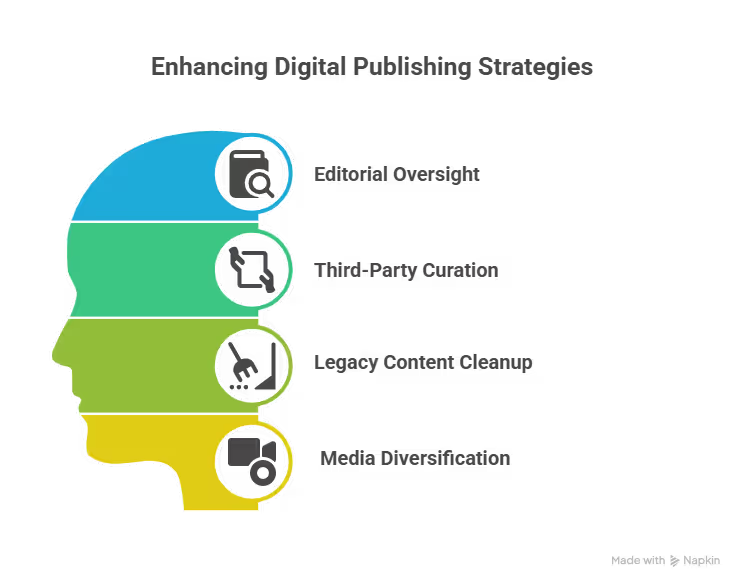
Publishers should:
- Enforce editorial oversight. Editorial teams must verify facts, review tone and ensure compliance with policies.
- Curate third‑party contributions. Sponsored posts, native advertising and guest articles must align with the site’s mission.
- Clean up legacy content. Conduct audits to identify content that duplicates others, lacks unique insights or no longer serves users.
- Diversify media. SGE and other AI experiences favour pages with structured data, images and videos. Publishers should invest in multimedia storytelling.
Implications for marketers
Marketers plan campaigns across channels, but SEO remains a cornerstone. With E‑E‑A‑T and generative AI, marketers should:
- Shift from keyword stuffing to intent matching.
- Use research tools to understand user goals and questions.
- Create comprehensive guides, how‑to articles and comparison pieces.
- Include personal anecdotes, expert commentary and data to satisfy both experience and expertise signals.
- Optimise technical fundamentals. Page speed, mobile responsiveness, accessibility and security are prerequisites. Lazy loading, efficient image formats and robust hosting contribute to Core Web Vitals performance.
- Leverage structured data. Implement relevant schema markup to help search engines interpret content. Structured data can enhance eligibility for rich results and inclusion in AI snapshots.
- Monitor AI search features. Use tools like Search Console and Keyword Planner to assess how generative experiences are affecting traffic.
- Align content with brand voice and ethics. AI can produce generic text, but differentiation comes from brand personality and values.

Do you want more traffic?



.jpg)
.jpg)